SubClub

A subscription-sharing concept exploring how people can split the cost of multi-user plans without losing track of payments, access, or who they’re sharing with.

Role

UI/UX Designer · Product Designer

UI/UX Designer · Product Designer

Industry

FinTech

FinTech

Project Type

Personal

Personal

Year

2025

2025

Platform

Mobile

Mobile

Tools

Figma · Affinity Designer

Figma · Affinity Designer

Contribution

Research · UX Strategy · Information Architecture · Interaction Design · UI Design · Prototyping

Research · UX Strategy · Information Architecture · Interaction Design · UI Design · Prototyping

Problem

Premium access gets expensive when every subscription is paid alone.


Streaming and digital services increasingly use subscription plans to package premium content and features. For people who use several services, the monthly cost can quickly become difficult to justify.

The research behind SubClub focused on students and budget-conscious users who may want premium access but are more sensitive to subscription costs.

Multi-user and family plans create another possibility: instead of one person carrying the full cost, several people could contribute towards a shared plan.

But cost-sharing introduces its own problems:

  • Who is part of the subscription?

  • Who has paid?

  • How much does each person owe?

  • What happens when someone leaves?

  • Can the people involved be trusted?

The challenge was not simply splitting a subscription. It was making the shared financial relationship understandable.

I started by looking at why people subscribe, why they stop, and what makes sharing feel safe.


The research combined desk research, subscription-market research, competitor analysis and a planned user survey.

The initial research looked at the growth of subscription-based digital services and the idea of “subscription overload” — the accumulation of multiple paid services over time.

I also reviewed existing subscription-sharing products, including Subspace and Sharesub, focusing on how they handle discovery, joining groups, payments, identity and subscription management.

The research pointed towards four areas that would matter most in the product:

Affordability
Users need a clear understanding of how much they save and what they pay.

Trust
Sharing access with another person requires more than just a payment flow.

Clarity
Users need to know who is involved, what they owe and what they are getting.

Control
Leaving or managing a shared subscription should not feel complicated.

The opportunity wasn't simply to make subscription sharing possible. It was to make the shared state visible.

  1. Subscription overload

People don't necessarily subscribe to just one service.

Streaming, cloud storage, software and other digital products increasingly use recurring subscriptions. The research framed this as subscription overload: the more services someone wants, the harder it becomes to justify paying for each one individually.

For SubClub, this created the initial opportunity:

Can people get access to premium services without carrying the entire cost themselves?

The concept focused on multi-user and family plans rather than individual subscriptions.


  1. The problem changes when money is shared

Splitting a subscription sounds simple.

The actual experience isn't.

Once multiple people are involved, the product has to keep track of:

  • Membership

  • Payments

  • Access

  • Renewal dates

  • Outstanding amounts

  • Who manages the subscription

  • What happens when someone leaves

This changed the problem from:

“How do I buy a subscription?”

to:

“How do I manage a subscription that I share with other people?”

That distinction shaped the rest of the product.

What I wanted to learn

I designed a survey around five questions:

01 — Current behaviour
Which subscription services do people already use?

02 — Price sensitivity
Have people avoided premium subscriptions because of price?

03 — Sharing behaviour
Have they shared subscriptions before, and would they consider sharing costs?

04 — Trust
What would make someone comfortable sharing with another person?

The survey specifically explored known individuals, verified users, ratings/reviews and clear terms as potential trust mechanisms. Subscription Sharing App

05 — Value

Which premium benefits matter enough to justify paying?

The survey included ad-free experiences, exclusive content, better streaming quality and offline access. Subscription Sharing App

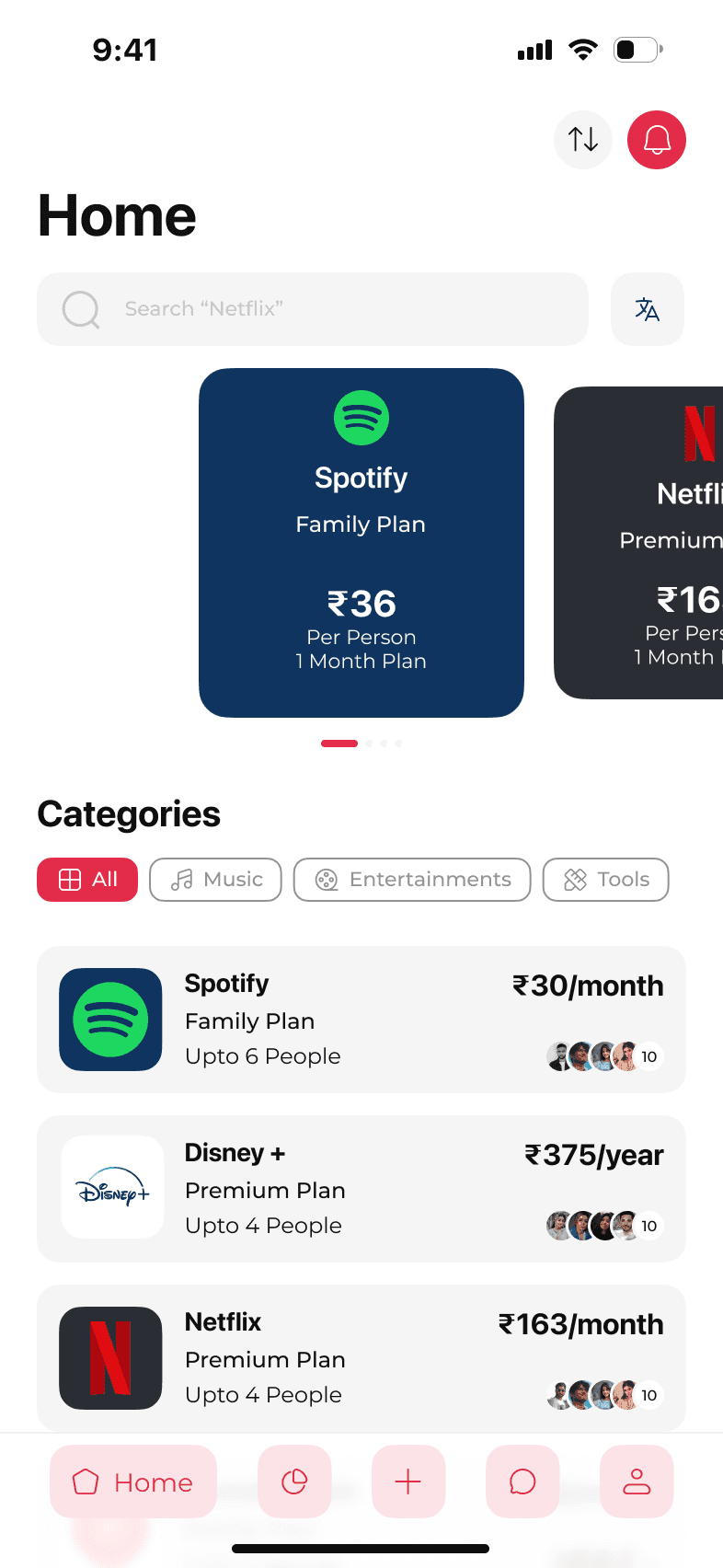
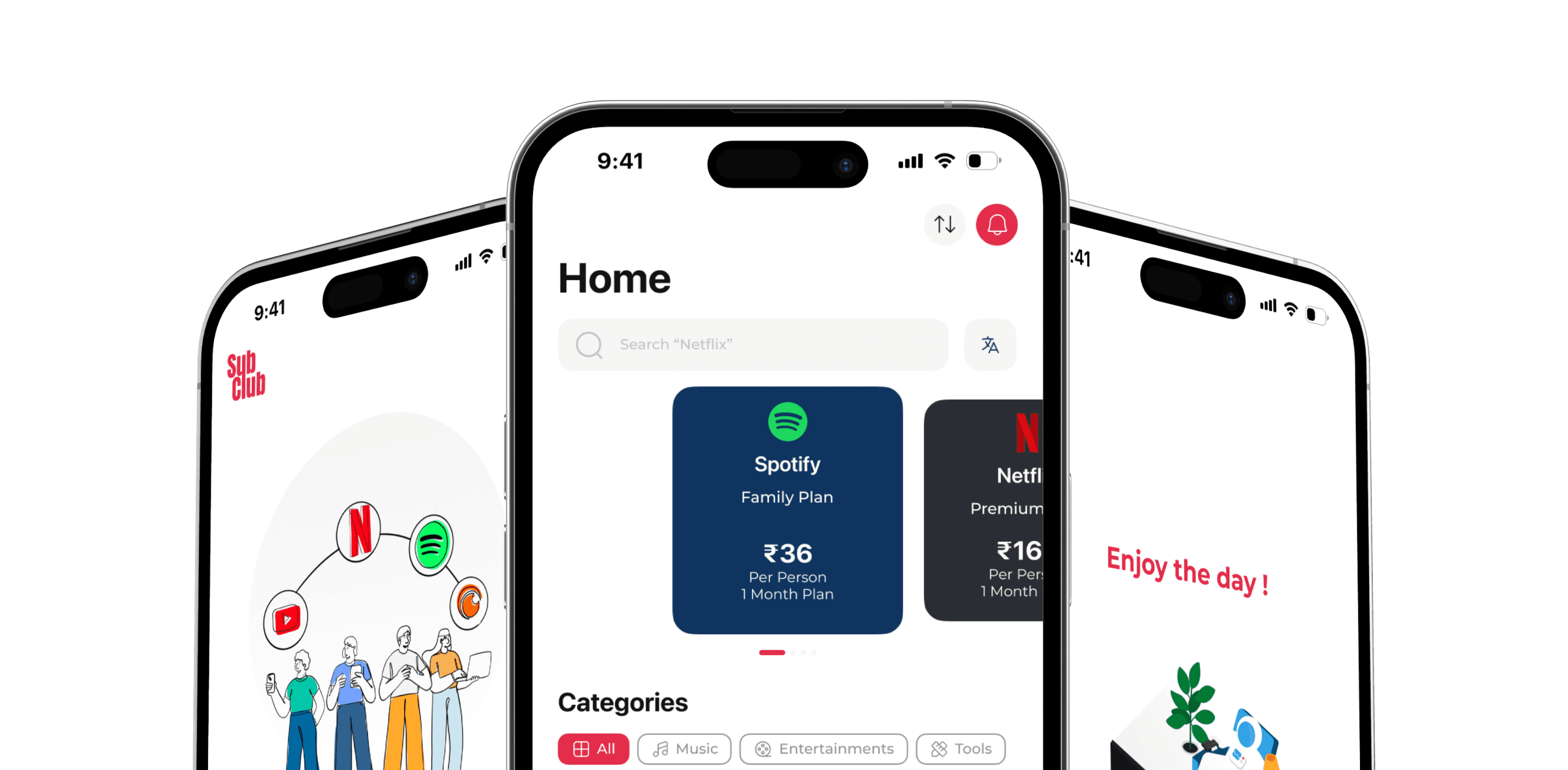
SubClub makes shared subscriptions easier to understand and manage.

The product brings subscription discovery, member management and payment tracking into one mobile experience.

Discover

Browse subscriptions and available plans.

Join

Review the subscription, members, pricing and terms before joining.

Pay

See your exact contribution and payment status.

Manage

Track active subscriptions, members, renewals and outstanding payments.

The goal is simple:

Everyone should know what they're paying for, who they're sharing with and what happens next.

The difficult part wasn't finding a subscription.

It was understanding the shared state after joining.

A traditional subscription app mostly has one relationship:

User → Subscription

SubClub introduces several:

User → Subscription → Other Members → Payments

That means the interface needs to make these relationships visible without turning the experience into a financial dashboard.

When sharing gets complicated

Sharing a subscription can reduce the cost, but adding more people also adds more things to manage.

Who has access?
Who has paid?
How much does each person owe?

Existing subscription-sharing products showed that joining a group, verifying users and keeping track of payments can become complicated. Subscription Sharing App

The opportunity was to make the shared subscription easy to understand from the moment someone joins.

Make the shared state visible

SubClub brings the important parts of a shared subscription into one place.

Discover — Find a plan that fits.
Join — Understand the plan and members before committing.
Pay — Know exactly what you owe.
Manage — Track payments, access and renewals.

Instead of treating subscription sharing as a simple payment transaction, the product treats it as an ongoing relationship between people, money and access.

User Interface

Sharing the cost is easy. Managing the relationship is the real product.

SubClub started as an idea around making premium subscriptions more affordable.

It evolved into an exploration of how people could understand and manage shared access - from joining a plan to tracking payments and membership.

The product isn't just about splitting a bill.

It's about making shared subscriptions easier to understand.
Projects

Explore more like this one

Selected projects that reflect my approach to design, development, and execution.